President's Column


Thomas G. Giallorenzi


LEOS has an active and growing chapters' program that is aimed at stimulating local activities which foster the professional growth of our technical community. This chapters' program was described in an earlier column, where I also briefly mentioned the desire on the part of LEOS to encourage the formation and growth of student LEOS chapters. The goal of these student chapters would be to introduce new engineers and scientists in the photonics disciplines to the professional activities and services offered by LEOS and to foster their professional growth and exposure.

I want to take this concept a step beyond student chapters to the general concept of getting students involved early in their careers to participation in professional activities. Professional society involvement not only offers a means of obtaining technical information but it is also a means to develop the so-called network of contacts which is so important in understanding not only what people are doing but why they are motivated to do it. This latter point is important if one is to be competitive. It is difficult to obtain the trends in a technology simply by reading journals. As so many of us know, a ten minute conversation with our peers on a topic in many cases can change our thoughts and plans on the course of our research.

Conference participation affords a good opportunity to meet people and the conference reception is planned to facilitate this networking as is informal talking in the conference hallways. But one has to be forward enough to approach people and start a conversation. This is particularly difficult for students to do as I can remember from my student days. As a student, one tends not to be overconfident in their ability and in many cases is afraid to say something for fear that it might be incorrect. Shyness doesn't help either. While meeting people is difficult, it is important to our professional careers and in order to be successful, it must be done.

LEOS is trying very hard to facilitate this networking and encourages students to come by its booth for assistance. We find that many of the LEOS volunteers are more than happy to meet, speak with, and help students since they all went through the same maturing process. Successful networking can come in very handy when it comes to looking for a job, obtaining a reference or just setting up a laboratory visit.

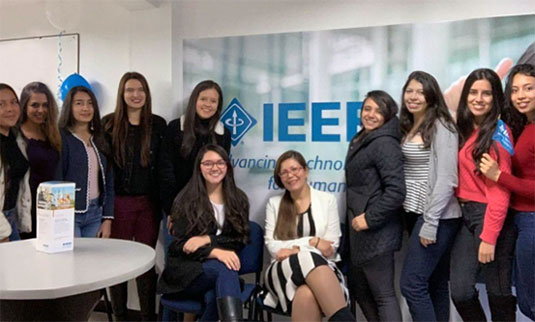
As another means of facilitating “networking”, LEOS is hoping to establish more student chapters. We formed our first one this year at CREOL in Orlando, Florida and would like to establish more at other universities. Our goal is to eventually have a student chapter at every major university that has major photonic programs. This may not be practical nor desirable in those cases where a local LEOS chapter exists. In these cases, we want to encourage students to become active in the local chapters. The idea is to get students familiar with the idea of being active in professional activities. These chapters would hopefully represent a networking forum with local industrial professionals who could be invited to speak at chapter colloquia on their work, on what it is like working for a big or small company, on what companies look for in new hires, what are their hiring and interviewing practices, and what job opportunities might exist in a given industry. It is often easy under the umbrella of a chapter to invite a well known person to present a paper which has already been given at a conference. This presents a “user friendly” environment to start a student's networking with people well known in the field.

LEOS as a Society is ready to help establish student chapters and get them running. IEEE has information on how to start a student chapter (contact l.durrett@ieee.org; Tel: 908-562-5523). LEOS will provide up to $500 for start-up funds. Once the chapter is formed and running, LEOS may provide up to $2000 of support annually to foster the chapter activities. LEOS also supports up to four Distinguished Lecturers each year to travel to the chapters and provide state of the art lectures on topics on photonics. Monetary awards are also given to active chapters for the largest membership increase, most improved chapter, most innovative and for the chapter selected as “Chapter of the Year”.

If the photonics program at a particular school is made up of only a small number of students, we encourage the formation of more interdisciplinary student chapters with other IEEE societies. For example, an electrical engineering department with several photonics, semiconductor device and microwave professors should consider forming a joint LEOS/Electron Device Society and perhaps a Microwave Theory and Techniques Society student chapter. Since so many industrial activities now are interdisciplinary, these joint student chapters not only help the students become professionally active but also expose them to more engineering topics than is possible given the day to day pressures of school. This exposure could help develop the professional flexibility demanded by the work place today.

Today's students are tomorrow's leaders of our profession and for that matter the leaders of LEOS. Professional involvement today as students will follow them through their careers and will make it easier for them to be more competitive and effective. LEOS will help in any way it can to help its' members. Please contact the LEOS office so that we can start helping new people entering our field become active, contributing members to the growth of our profession.


BACK to In this Issue . . .